From 5 to 30 Bags: How Organic Fertilizers Transformed Mr. Mgaza’s Rice Farm
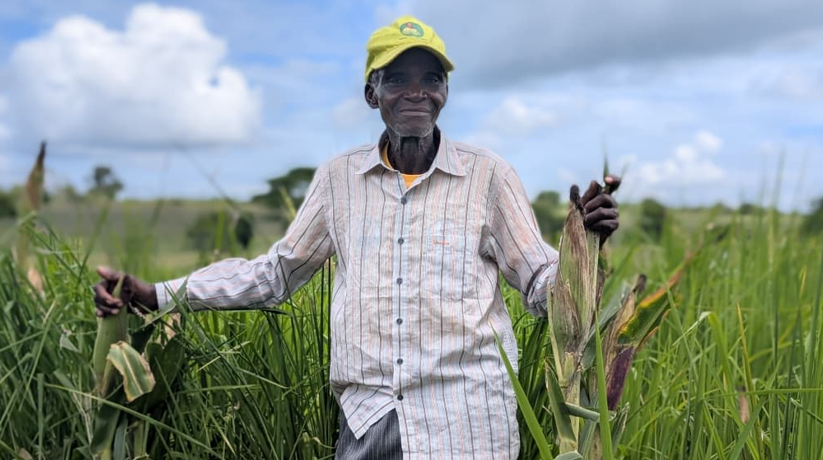
Mr. Mgaza Ally, a 64-year-old rice producer and chairperson of the Zawiyan Group in Kwamkopi Village, has been cultivating rice for over a decade. For many years, he practiced traditional farming without applying any type of fertilizer or pesticide to his fields. Reflecting on his farming experience, he explained:
“Not applying anything on the farm was a way we used it here since we adopted it from our fellow farmers. Harvested rice was for both domestic and business use. At some point in time, the harvests were not satisfying; in two acres, I could only get five bags of rice, which is strange as the yields were very low. I knew the low yields were contributed to by the absence of fertilizer in my farming plot, and it was something I just found normal, as whatever I could harvest would go to the family. Rice was not a priority crop or a source of income to me.”
A change began in 2024, when a village meeting created an opportunity for farmers to learn about agroecological farming practices. During the meeting, Zuhura Hussein, a farmer facilitator, mobilized participants interested in forming groups to receive training on agroecological practices in farming and livestock keeping. At first, Mr. Mgaza was not convinced that the training would be relevant to him. However, his interest grew when Zuhura explained that farmers would be trained on how to prepare biopesticides and biofertilizers using available resources and materials found within their community.
Following the group mobilization, Mr. Mgaza joined the Zawiyan Group. The group received training on the preparation and application of biopesticides and biofertilizers, including compost and farmyard manure. For Mr. Mgaza, the training changed the way he looked at resources that had always been around him. He realized that materials previously considered ordinary or of little value could be used to improve soil fertility and crop production.
“I was not so sure that the materials used for compost and manure preparation are just around us and we never knew if they could be used. For the case of manure, I am residing near pastoralists whom I asked for it, and they gave it to me freely.”
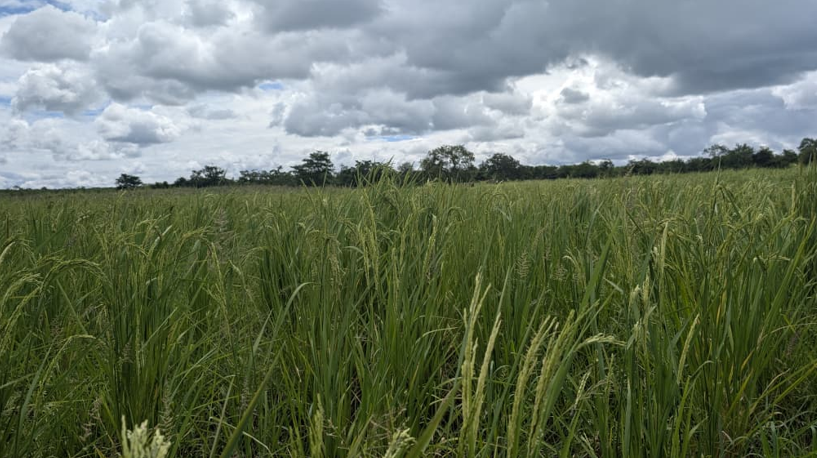
After learning about the benefits of organic fertilizers, Mr. Mgaza began applying compost and farmyard manure to his rice field. Within two growing seasons, he observed significant changes in the performance of his rice crop. The plants became healthier, and he began harvesting considerably more rice than in previous seasons.
“Previously I used to get only 5 bags (with 500kg) from the two acres, but as of now I am getting up to 28–30 bags (100 kg per bag) of rice from the two acres. It’s satisfying. Once I manage to have an irrigation system, I am sure I will reachup to 28–30 bags per acre.”
The increase in production has given Mr. Mgaza renewed confidence in rice farming. What was previously a crop mainly used for household consumption is increasingly becoming an opportunity for him to generate greater returns from his land. In addition to increased production, Mr. Mgaza noticed that the soil had improved in quality. It retained moisture better, appeared more fertile, and supported healthier crop growth compared to before. These improvements have given him confidence in the long-term benefits of using organic fertilizers. For Mr. Mgaza, the change is not only about harvesting more rice in the current season, but the improvement in soil condition also represents an investment in the productivity of his farm for future farming seasons.
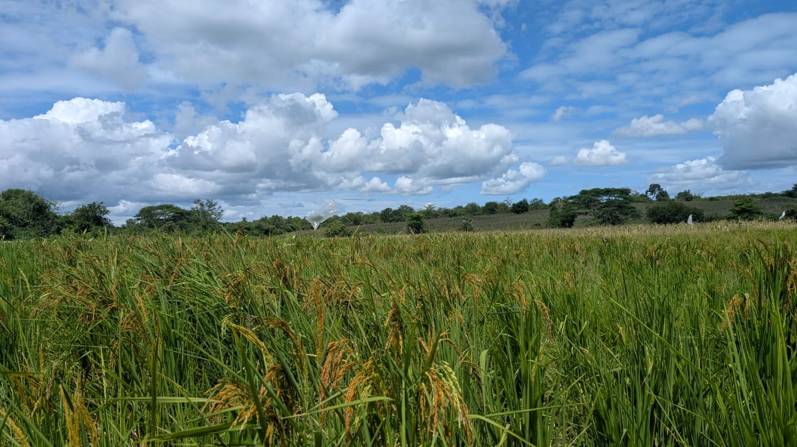
“The training has transformed my rice farm. I have harvested much more rice than before, and I can clearly see that my soil is healthier. I encourage other farmers to use organic fertilizers because they improve both crop yields and soil fertility.”
Mr. Mgaza’s experience demonstrates how access to practical knowledge on agroecological practices can enable farmers to make better use of locally available resources. From harvesting only 5 bags of rice from two acres to harvesting 28–30 bags from the same two acres, he has experienced a significant change in his rice production. With his continued use of organic fertilizers and his aspiration to establish an irrigation system, he looks forward to further improving the productivity of his rice farm.