
Improved Livestock Breeding Transforms a Pastoralist's Future: Sirandoi Digalu's Story
Success Stories from the Farmers and Pastoralists Collaboration (FPC) Project
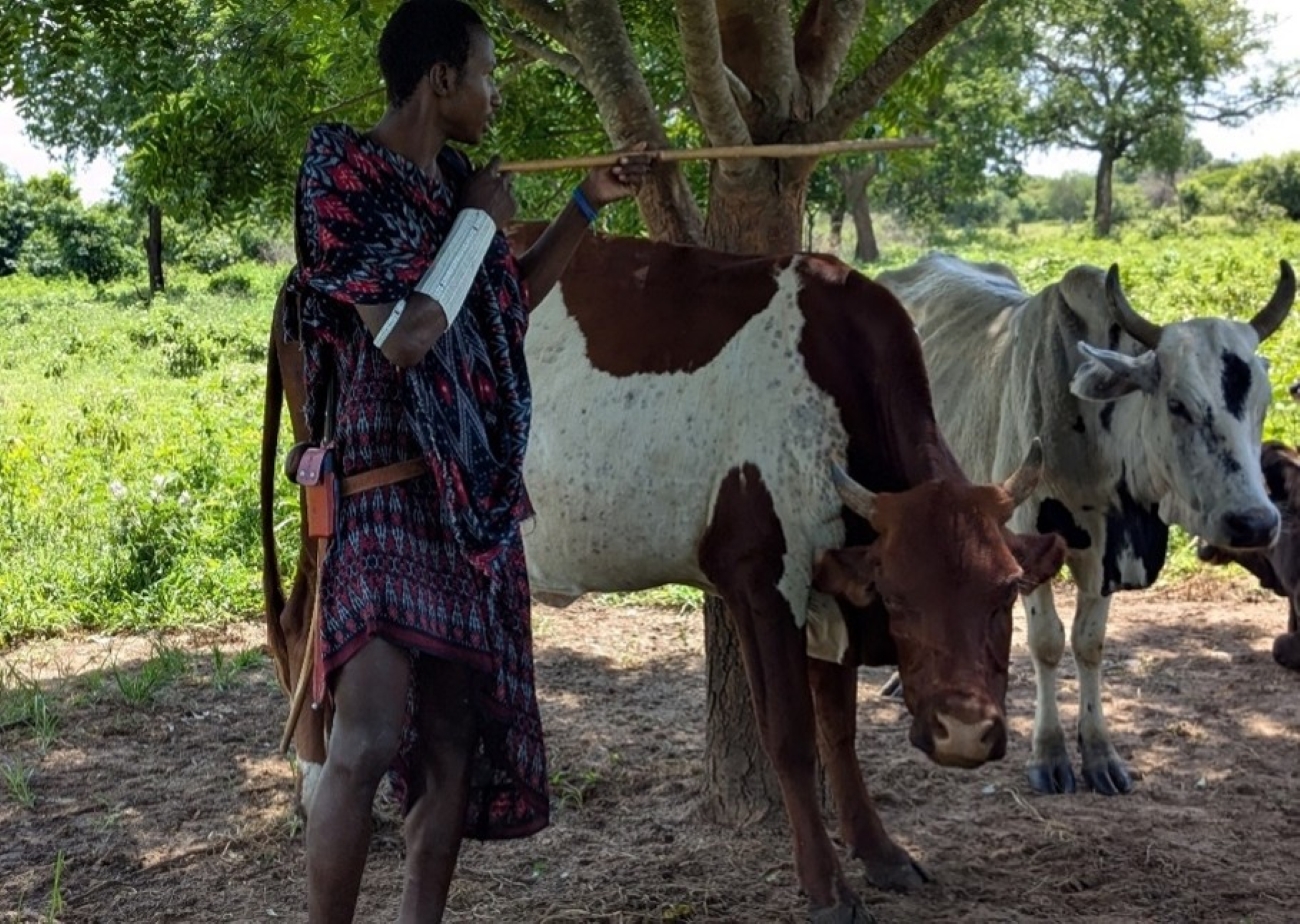
Improved Livestock Breeding Transforms a Pastoralist's Future: Sirandoi Digalu's Story
For many years, livestock keeping has been the primary source of livelihood for pastoralist communities across Tanzania. However, many households have relied on indigenous cattle breeds characterized by low productivity, slow growth rates, and limited milk production, making it difficult to maximize the economic benefits from livestock keeping.
This was the reality for Sirandoi Digalu from Vianzi-Mvomero, a dedicated member of the Mafanikio Group in Vianzi Mvomero. Like many pastoralists in his community, Sirandoi depended on local cattle breeds that were less productive and generated limited returns. A turning point came when Sirandoi became a participant in the Farmers and Pastoralists Collaboration (FPC) Project. Through the project, members of the Mafanikio Group received comprehensive livestock management training covering livestock fattening, pasture establishment, conservation of natural grass, and proper pasture storage to ensure feed availability during dry seasons.
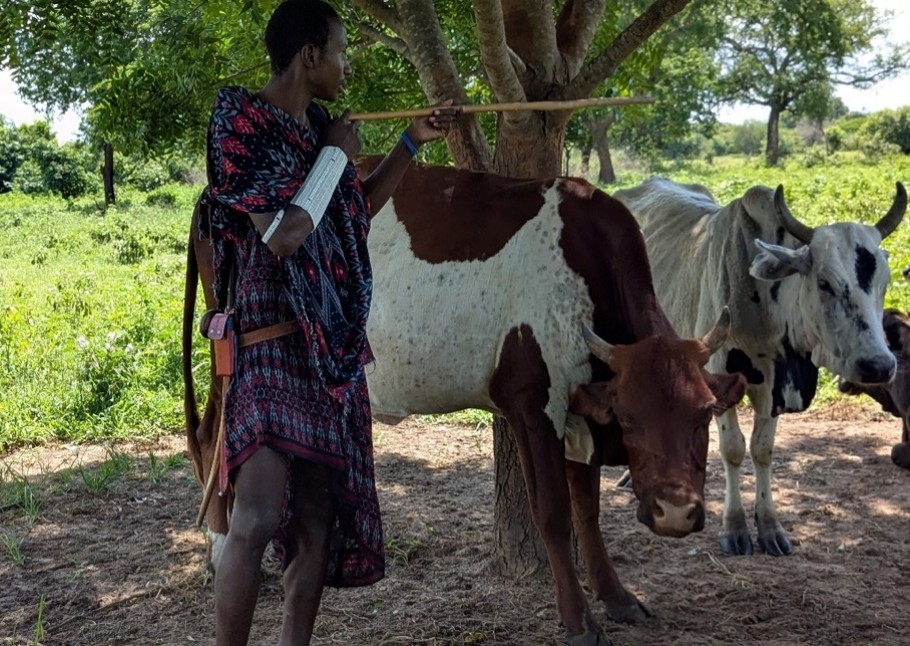
In addition to the training, the project introduced improved cattle and goat breeds to pastoralist groups to crossbreed with local livestock, aiming to produce animals that are more resilient to climate change, grow faster, attain higher body weights, and produce more milk. One of the most significant interventions was the distribution of improved breeding bulls to the Mafanikio Group. Since the bull was owned collectively, group members shared access to the breeding service, allowing many households to benefit from the improved genetics.
For Sirandoi, this intervention transformed his livestock-keeping journey. During the first breeding cycle, his local cows produced three healthy crossbred calves - one bull and two heifers. Compared to the local breeds, the crossbred animals demonstrated faster growth rates, stronger body conformation, improved health, and greater productivity, and they command significantly higher market prices (he can now sell 500,000/= for selling crossbreed calves and 2,000,000/= for selling a crossbreed bull or cow which is also thrice than the local breed) because of their superior body weight and quality. For the case of milk one cow produces 8 litres of milk per day which is thrice to the local breed.

Reflecting on the changes, Sirandoi explains that the intervention has done far more than simply increase the number of animals he owns - it has strengthened his confidence in livestock keeping as a sustainable and profitable livelihood. The benefits have also extended beyond the project participants: the Mafanikio Group now shares its improved breeding bulls with non-project pastoralists in surrounding communities, accelerating the transformation from low-productivity indigenous herds to stronger, more productive livestock across the wider pastoral community.
Sirandoi's story illustrates how targeted investments in improved livestock genetics, combined with practical training and community-based resource sharing, can empower pastoralists to increase productivity, strengthen climate resilience, and build more secure and sustainable livelihoods.


Related Posts


